|
Implantation bleeding is vaginal discharge which usually contains a small amount of pinkish or brownish blood. Only about a third of pregnant women experience implantation bleeding.
The egg becomes fertilized with a sperm within 12 hours after ovulation, usually in the outer portion of the fallopian tube. It then travels down the fallopian tube, increasing its size along the way. In the fallopian tube it becomes the zygote and doubles to two cells, four cells, then eight cells and becomes the "morula." As the morula enters the uterine cavity it's called a "blastocyst."
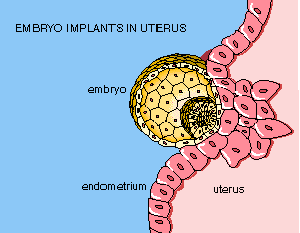
Implantation bleeding can happen at the time the fertilized egg implants in the uterus - the attachment of the fertilized egg to the uterine lining, on average between 6 to 12 days past ovulation (on average about 9 days after ovulation).
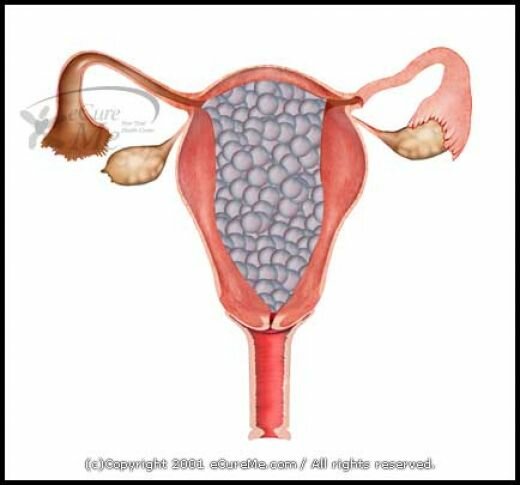
Because the lining uterus is made up of blood, there can be a bit of blood expelled in some women.
Period usually starts about 14 days after ovulation, so if you know when you ovulated and you experience some spotting, less than your period, about a week after ovulation, then it could be implantation bleeding. Sometimes the implantation bleeding is usually spotting; it's scanty, pinkish and not red and heavy like a period. Usually it lasts 1-2 days.
Implantation bleeding is vaginal discharge which usually contains a small amount of pinkish or brownish blood. Only about a third of pregnant women experience implantation bleeding.
The egg becomes fertilized with a sperm within 12 hours after ovulation, usually in the outer portion of the fallopian tube. It then travels down the fallopian tube, increasing its size along the way. In the fallopian tube it becomes the zygote and doubles to two cells, four cells, then eight cells and becomes the "morula." As the morula enters the uterine cavity it's called a "blastocyst."
Implantation bleeding can happen at the time the fertilized egg implants in the uterus - the attachment of the fertilized egg to the uterine lining, on average between 6 to 12 days past ovulation (on average about 9 days after ovulation).
Because the lining uterus is made up of blood, there can be a bit of blood expelled in some women.
Period usually starts about 14 days after ovulation, so if you know when you ovulated and you experience some spotting, less than your period, about a week after ovulation, then it could be implantation bleeding. Sometimes the implantation bleeding is usually spotting; it's scanty, pinkish and not red and heavy like a period. Usually it lasts 1-2 days.
Unless accompanied by cramping, backache or increased bleeding, a small amount of blood being discharged should be considered as implantation bleeding which is nothing to be concerned about.
Implantation bleeding time is before you expect your period and many people mistaken it for spotting before their period begins. As mentioned before, most women do not experience a full on bleeding with implantation. Instead, they may experience a bit of spotting in their panties or even some pinkish or brown discharge. This is usually not a typical menstrual bleeding color flow. If you had period-kind of bleeding - better to assume that you have your ordinary period. If you happen to get a positive pregnancy test and you are experiencing a flow of blood you better visit your doctor for avoiding miscarriage or any other
complications.
 |
Implantation bleeding is something that many women assume that they will experience, but many doctors believe that it is the exception not the rule. So the conclusion is- if you are pregnant, better don’t expect the implantation bleeding; and if you had implantation bleeding – don’t worry, you do not need to be
alarmed if you do experience it.
If you experience bleeding regularly after ovulation and you are not pregnant then you may want to discuss with your doctor whether some tests can be done to make sure everything is OK.
|